AI Agent Data Exfiltration Risks and Prevention Controls
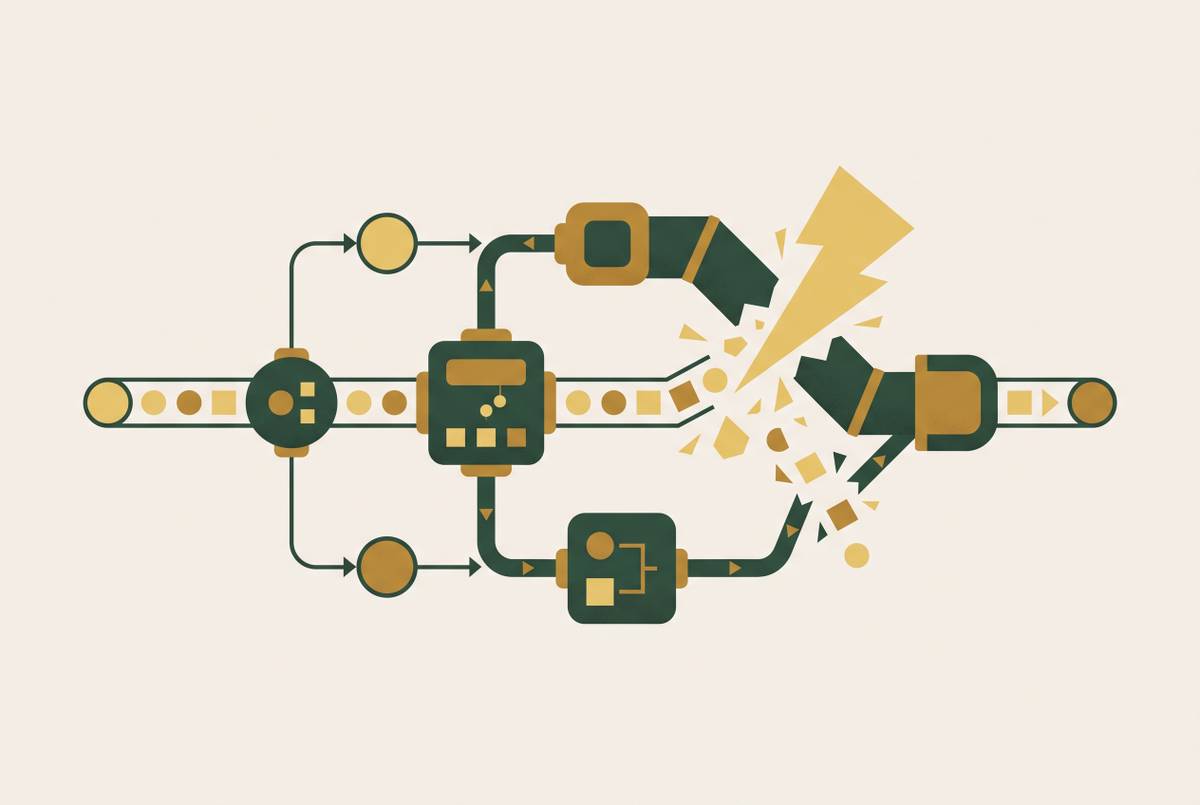
AI agents bypass traditional security tools, requiring new controls to prevent data theft.
Agentic at Scale Editors
Editorial team
The Agentic at Scale editorial team covers ai risk & compliance, ai change management and adoption frameworks.
18 stories
AI agents bypass traditional security tools, requiring new controls to prevent data theft.
Agents with tool access turn prompt injection from text confusion into system compromise.
Governance must be built first, not bolted on after pilots succeed.
Peer-led networks of trusted colleagues drive AI adoption where top-down rollouts consistently fail.
Most enterprises have AI tools but lack the governance and infrastructure to scale them safely.
Real adoption means workflow redesign, not just licenses handed out.
Slack's standardized agent integration creates security gaps enterprises aren't prepared to handle.
Security teams are blocking AI agents because governance gaps expose risks their tools can't detect.
Most enterprise AI agent pilots fail due to infrastructure gaps, not lack of employee interest.
The standard leaves a gap between policy and runtime behavior in autonomous AI systems.
Enterprises deploying AI agents fast lack the governance controls to secure them safely.
Tool approval workflows need continuous monitoring, not just a single sign-off.
Agents need enforceable policies, not just model instructions, to contain LLM risks.
Enforce what agents do at runtime instead of hoping they follow written rules.
Unapproved AI servers give agents active control over systems, not just data exposure.
Enterprises need distinct access controls matched to each agent's autonomy and risk level.
Enterprise AI agents need golden paths redesigned for how they actually work, not how humans do.
Governance gaps, not weak models, drive AI agent failures.