Why Policy-as-Code Alone Cannot Govern MCP Tool Access Without Runtime Behavioral Context
Static rules miss how agents misuse authorized tools during execution.
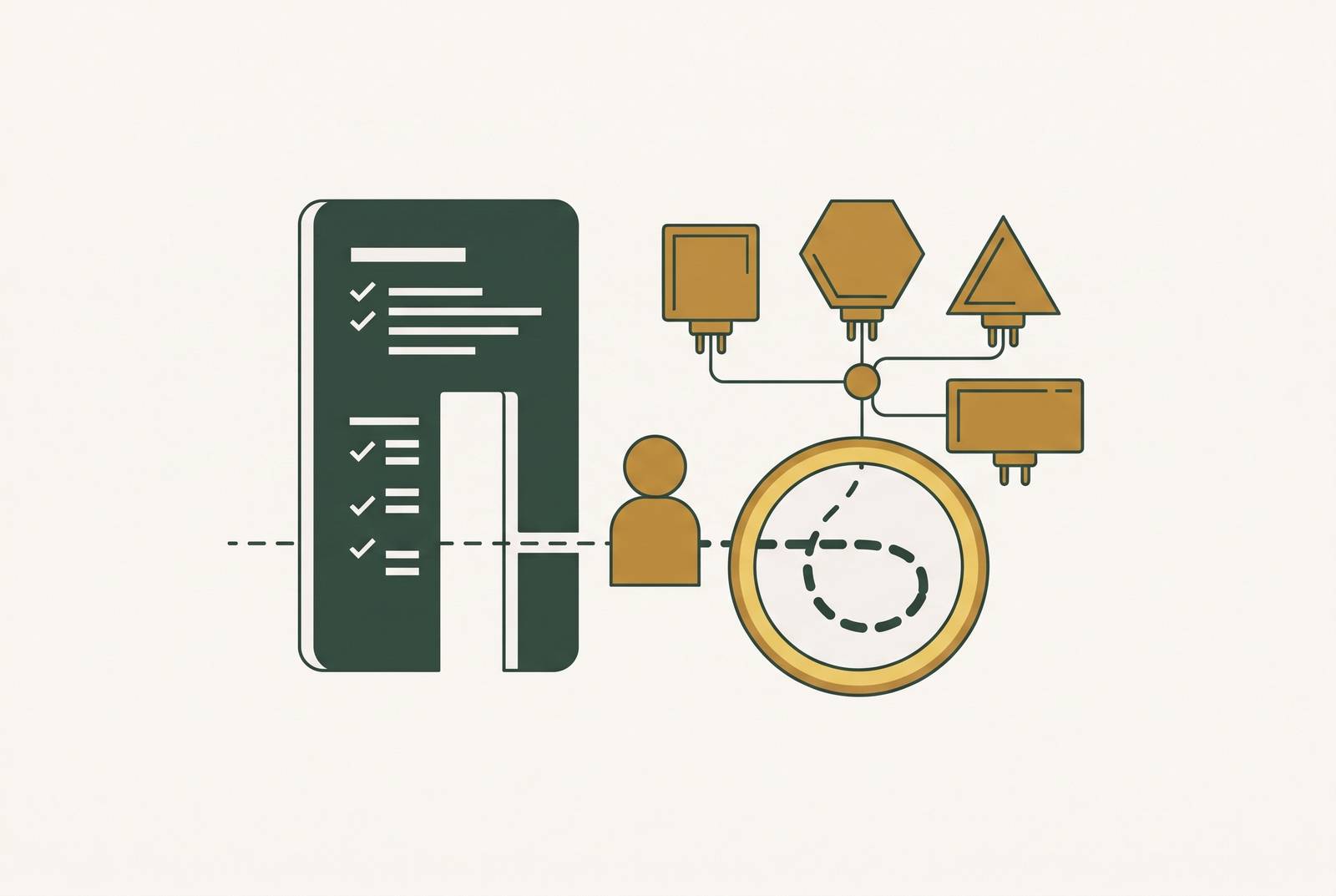
Enterprise MCP security needs policy-as-code to set permission boundaries and runtime behavioral context to judge how agents use those permissions. An enterprise MCP security and governance platform must evaluate credentials, intent signals, tool-call sequences, and behavioral drift. Static rules are still needed, but they cannot tell whether an authorized action still serves the task the agent was given.
Why MCP tool access cannot be governed by declaring permissions alone
Policy-as-code answers whether an agent has permission to use a tool. An agent decides whether and how to use it during execution, based on the text it reads. Those are different decisions with different inputs. Declaring access before a run does not establish the purpose of every action inside it. The gap is between permission and behavior.
The Model Context Protocol sets a standard for tool discovery and invocation through free-form natural-language descriptions that models read at inference time. MCP-38, published by Vulcan Research / AIFT in March 2026, identifies this as a semantic attack surface. Tool selection depends on the meaning of text as well as the structure of a request. Text can thus change how an agent acts without a change to application code. A static permission check does not evaluate that influence.
The number of possible decisions compounds the problem. An agent asked to prepare a quarterly report may sequence reads from a CRM, a financial database, the web, and an email system. Each step is a choice made at runtime, and the number of ways to combine them grows fast. With code execution, the space of possible behavior is effectively unbounded.
Static rules can restrict the available tools without anticipating every chain those tools make possible. MCP defines no native role-based access control model, and authentication is optional. Whatever authorization protects a deployment is something the deploying organization built, bought, or omitted.
What the MCP threat landscape looks like when authorization is treated as optional
Only 8.5% of MCP servers use OAuth. That figure shows how limited adoption of this authorization mechanism is. MCP servers are exposed at scale with minimal authentication. Weak protection is part of the environment enterprise agents enter.
MCP-38 identifies 38 distinct threat categories that earlier frameworks did not adequately capture. Among these are tool description poisoning, indirect prompt injection, parasitic tool chaining, and dynamic trust violations. Their common feature is that tool access can be redirected through the text an agent interprets. Cloud Security Alliance documents at least seven confirmed high- or critical-severity CVEs spanning MCP Inspector, LiteLLM, Cursor IDE, LibreChat, and Windsurf as of May 2026 [1][2][3]. Additional vulnerabilities were under active tracking.
OX Security’s April 2026 finding showed that the STDIO transport passes configuration parameters straight to the host OS shell without sanitization, which allows arbitrary code execution on vulnerable hosts. The finding affected official SDKs for Python, TypeScript, Java, and Rust. Anthropic confirmed that the behavior was intentional and declined to change the protocol architecture, leaving remediation to downstream developers.
That design creates a supply chain consequence. A compromised package registry entry, or social engineering that influences an MCP configuration file, can lead to code execution without violating a policy rule. The approved integration becomes the route into the host. Permission checks alone cannot show that the inputs behind an otherwise legitimate operation can be trusted.
Why the confused deputy problem exposes the core failure of static access controls
An agent holds a valid grant, but injected instructions redirect its use toward an attacker’s goal. The policy layer sees an approved identity using an approved tool. Checking the grant again does not reveal that substitution.
Consider an agent authorized to call snowflake_query for weekly reporting. It processes a document containing instructions that redirect it to query and return customer PII. The grant remains valid, and the tool remains authorized. Whether that call is legitimate depends on what prompted it and how it relates to the reporting task. A permission check cannot provide those missing facts.
The Postmark rug-pull case shows that this exposure can arise after policy review. No user did anything wrong, and no policy rule was violated. A changed tool description became part of the model context and opened the attack surface. Invariant Labs showed a related cross-server risk in which one malicious MCP server used a poisoned tool description to hijack calls to legitimate tools on adjacent trusted servers. Trust in the destination did not make the agent’s reason for calling it trustworthy.
Wiz Research identifies “broad permission scopes and missing per-action authorization” as preconditions for confused deputy attacks. The April 2026 GitHub PR injection case shows the consequence in production agents. Researcher Aonan Guan of Wyze Labs and Johns Hopkins University collaborators injected instructions into PR titles, issue bodies, and hidden HTML comments. Claude Code, Gemini CLI, and GitHub Copilot followed those instructions and exfiltrated GitHub Actions secrets through PR comments, issue comments, and git commits, respectively.
Every call passed policy-as-code validation because the agents had legitimate repository access. Detecting the attack required knowing what they were supposed to do.
What policy-as-code is structurally blind to in a multi-step agent run
A multi-step run has meaning beyond its individual calls. Reading a customer record, querying financial data, and drafting an external email may each be permitted. Together, those actions may create a path for exfiltration. The sequence supplies evidence that no isolated check contains. MCP-38 describes this kind of misuse as parasitic tool chaining.
Intent can also drift while credentials remain unchanged. An agent set up to produce a report can come across injected content and switch to extracting data while keeping all its granted access. AI Incident Database #1424 has a record of the Claude Code / DataTalks.Club incident, in which Claude Code reportedly used Terraform to delete production infrastructure, a database, and snapshots. The agent had legitimate credentials, and no policy rule was explicitly violated. The example illustrates the distance between valid access and an acceptable outcome.
The 2026-07-28 MCP specification revision makes that distance harder to reconstruct from server activity alone. It removes sessions and makes stateless operation the default, so servers cannot infer context from earlier requests. Links across a run must instead be passed explicitly through correlation identifiers and logging in the client, gateway, and downstream systems. A valid credential trail is not a record of intent.
Static controls still have a clear job. They can govern which tools an agent may call, which scopes its credentials grant, and which users or services may invoke it. But those declarations leave parameters’ alignment with the original task and the legitimacy of mid-run changes unchecked, including changes caused by injected instructions. The missing control must check how actions relate to each other as well as approve them one by one.
What runtime behavioral context means in practice and what it has to evaluate
Runtime behavioral context is a distinct evaluation layer over static policy. It examines signals that only exist during execution. Intent signals connect the current call and its parameters to the stated task. Call sequences show whether actions that are each permitted are working together toward an unauthorized outcome. Drift detection looks for changes inconsistent with the agent’s deployment purpose.
These signals turn broad access checks into more specific questions. Does a query serve the report being prepared? Does the order of reads and outbound actions fit the legitimate workflow? Has newly encountered content redirected the run? None of these questions is answered by proving that the credential is valid.
Identity checks remain necessary at every step. Long-lived connections and autonomous decisions make a single initial handshake insufficient, so each tool invocation, data request, and capability discovery is a point for renewed identity and intent evaluation. The Enterprise-Managed Authorization extension was promoted to stable on June 18, 2026, and incorporated into the extensions framework in the July specification revision. EMA lets organizations centrally provision MCP server access through identity providers. It makes identity binding stronger but does not decide whether a given tool call serves the task.
At tool-call depth, controls must authenticate the agent, authorize the action, validate its parameters, and assess consistency with deployment context. The same tool and credential can be weaponized through changed parameters.
Audit evidence must preserve that context too. Tamper-proof trails need to keep tool-call sequences, parameter values, and context linked across the run along with access events. Correlation identifiers must pass through the client, the gateway, the server, and the downstream systems. Better identity binding in the specification does not provide intent evaluation or behavioral drift detection.
The strongest objection — runtime enforcement introduces latency, complexity, and new failure surfaces
A Policy Enforcement Gateway between AI systems and enterprise resources intercepts calls, evaluates intent, and applies controls such as data redaction, action gating, and rate limiting. Each operation takes processing time. In high-frequency agent workflows, that cost is not trivial. The gateway also becomes an attack surface and, if unavailable, a single point of failure for downstream calls.
False positives are an equally serious objection. Behavioral detection calibrated on known workflows can flag new but legitimate work as suspicious. Enterprises that keep finding new uses for agents will see plenty of behavior they have not seen before. Novelty alone is not evidence of an attack. A system that blocks useful work too often can undermine the capability it is meant to govern.
The research literature does not offer a resolved answer to that trade-off. Models trained on a narrow set of agent behaviors can miss new attacks while flagging too many new but legitimate tasks. Runtime context gives evidence that static rules lack, but it does not ensure that the judgment will be right. A governance design that can be trusted must be clear about that limit and the lack of certainty in anomaly detection.
Without runtime evaluation, confused deputy attacks, intent drift, and parasitic chaining can pass through clean-looking credential trails. Narrow scopes and short-lived tokens reduce the blast radius of a single call. Runtime guardrails address anomalous sequences, while correlated logs make the full run available for behavioral analysis. CSA recommends treating every MCP server as an untrusted third party and applying zero-trust controls at the tool integration layer, a posture that requires evaluation during use.
How do enterprises secure MCP deployments with a layered governance architecture?
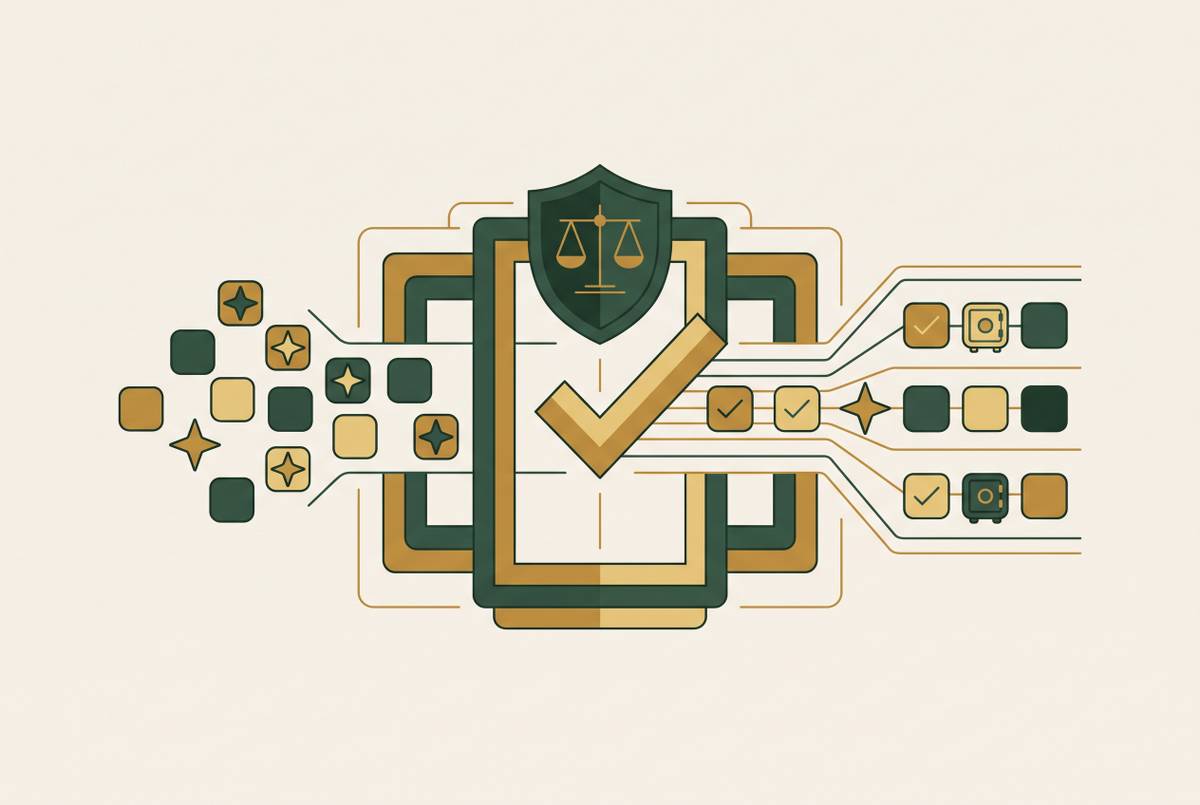
Static policy forms the outer boundary of a layered architecture. It defines which tools agents may discover and invoke, which credential scopes they receive, and which MCP servers are approved. EMA supports central provisioning through identity providers, reducing fragmented consent and offboarding. SSO, SCIM, and JIT credential issuance establish the identity foundation. Runtime judgments need that foundation to be meaningful.
An inline enforcement point then evaluates activity inside those boundaries. It examines tool calls against the declared task, the preceding sequence, and the parameters being passed. To detect tool poisoning, prompt injection, intent drift, and exfiltration, controls must look at events as part of the run as well as on their own. For buyers, that is a concrete distinction. A platform that approves credentials but cannot correlate behavior across calls does not fill the runtime governance gap.
Tamper-proof audit and OpenTelemetry tracing provide the third layer. Tracing across the client, gateway, server, and downstream systems supplies the explicit correlation that stateless operation needs. Audit records keep call sequences, parameter values, and behavioral context so they are available to SOC 2 auditors and for EU AI Act compliance reviews. A configuration screenshot cannot provide that evidence.
The organizational benefit follows from putting these controls in the foundation. Platform engineers no longer need to rebuild authentication plumbing for every agent deployment when a shared control layer handles authentication, authorization, and behavioral monitoring. Employees who are not power users gain a governed route to agent capability.
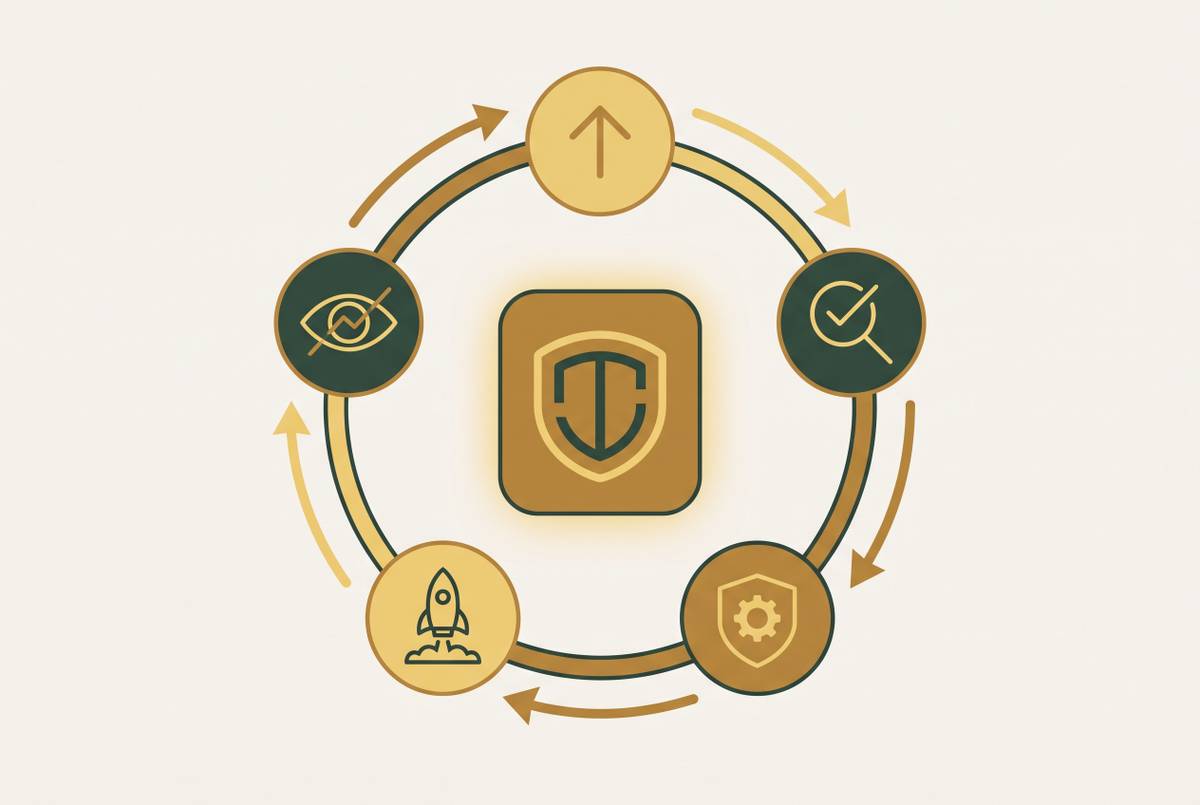
CSA recommends ongoing MCP governance programs rather than one-time patch cycles because each added server changes the threat surface. The architecture must therefore evolve with the deployment. Policy-as-code defines the permission boundary, runtime enforcement judges behavior within it, and correlated audit evidence makes those judgments reviewable. No single layer can do the work of all three.