MCP Control Plane Design Patterns for Governing Dozens of AI Teams Without a Central Bottleneck
Federated gateways and delegated namespaces let teams govern agents without central bottlenecks.

A unified MCP control plane for platform engineering teams combines federated gateways and registries, delegated team namespaces, tool-call policy-as-code, and just-in-time credentials. This lets dozens of AI teams share access controls without having to rebuild authentication for each project. The design principle is simple. Centralize the rules and audit view, but distribute enforcement and give teams bounded authority over their own tools.
Why governing AI agents at MCP scale is architecturally different from governing APIs or SaaS
Agents now deploy code, touch production databases, pay invoices, and provision cloud resources unattended. Their access is not just a software integration concern. An agent can chain tool calls into actions that change production systems before anyone reviews the result. Governing that behavior requires more than knowing which credential authenticated.
The familiar controls each see only part of the action. IAM logs show which credentials were used, but may leave out the agent, tool call, or returned data. API gateways govern HTTP requests but can miss the aggregate behavior of a sequence of calls. MLOps platforms focus governance on the model lifecycle, while observability records actions retrospectively.
MCP standardizes connections without settling these questions of authority. Its JSON-RPC 2.0 messaging defines how calls travel. Without shared governance, N agents connecting to M tools leave independent integration points to secure, monitor, and maintain. Every new team adds more of them. The pattern that made unmanaged SaaS sprawl a governance crisis is repeating at the tool-access layer, with higher speed and greater privilege.
What production MCP deployments without central governance actually look like
Consider a composite deployment after six months of serious MCP use. Agents run on credentials that nobody can trace to a current owner. They still call tools removed from the sanctioned list sprints ago, while tool descriptions have drifted from the versions security reviewed. IAM logs do not expose that whole picture. The process failed between initial approval and continued use.
That gap gives attacks room to work. Tool poisoning hides instructions for how to behave inside tool descriptions, while a rug pull changes definitions after access has been granted. The MCPTox benchmark found high attack success rates against major LLM agents. BlueRock Security demonstrated another failure against Microsoft’s MarkItDown MCP server, retrieving AWS IAM access keys through an unvalidated URI parameter without breaching the network perimeter. A server with broad service credentials can also become a confused deputy that does more than the caller has authority to do.
The accountability gap compounds the access gap. As of early 2026, only roughly a third of organizations have a named person accountable for agent behavior as a pre-deployment control. Far fewer have formal individual accountability, a security review before production deployment, or a documented process to pause or revoke agent access.
The gateway-plus-registry pattern and what it actually buys
A gateway provides a common point where agent requests can be intercepted before they reach MCP tools. Authorization moves out of individual clients and servers into shared infrastructure. At that boundary, the control plane can connect the agent identity, tool, arguments, policy decision, and result into one auditable chain.
The registry supplies the inventory that enforcement needs. It records which servers exist, what tools they expose, and who may use them. It also provides an approved baseline against which tool-description changes can be detected. Adding a client does not require rebuilding the access rules embedded in every existing connection.
A centralized gateway offers central visibility when everything is reachable from one network segment. Servers co-located with the systems they govern provide stronger isolation in segmented environments, while a hybrid accommodates mixed SaaS and on-premises estates. The gateway-plus-registry pattern is the right base for each of those choices. But making one global gateway the mandatory path for every team introduces an enterprise-wide bottleneck and failure point.
Why a single global gateway becomes the bottleneck it was meant to prevent
The organizational queue appears before the architecture runs out of capacity. Each team needs tool allowlists, policy rules, and credential bindings entered into the central system. Dozens of AI teams still depend on one team to complete their access setup, even though the underlying connections are standardized.
The traffic path concentrates risk as well. A single gateway can become a failure point for all agent traffic, and every request must traverse the same network path. A policy mistake can affect agents across the organization. Centralization has reduced duplicated integrations but widened the reach of a bad configuration.
Nor does one gateway automatically produce useful accountability. Without identity attached to each tool call, its logs can still show only that a credential was used. They cannot establish which agent acted, in which workflow, or within which authorized scope. Both the enforcement path and the authority to configure it need a less concentrated design.
Federated gateway mesh and consistent policy across distributed enforcement
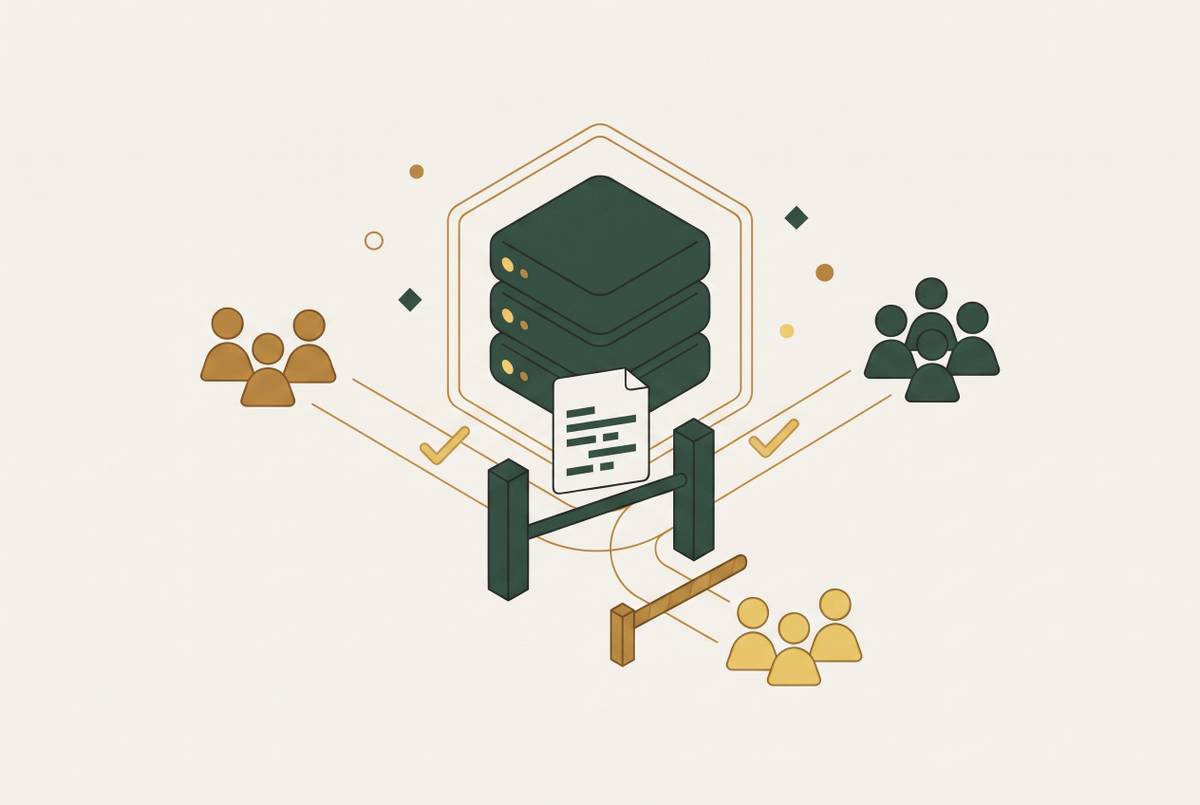
A federated gateway mesh separates policy definition from execution. Regional or domain-specific gateways enforce authentication, authorization, routing, and rate limits near the agents and systems they serve. A single control plane distributes policy and configuration while collecting audit telemetry. Platform engineers manage the shared baseline across teams’ individual connections.
IBM ContextForge is one implementation of federation. Its auto-discovery is limited to local/mDNS deployments. ContextForge also bridges legacy REST and gRPC services into MCP tools without requiring those services to be rewritten.
Teams can operate through their domain gateway under inherited rules, while security and IT maintain a common policy view. A new server does not require a fresh governance design. But spreading gateways out still leaves open who may write each tool’s policy. Without a second layer of delegation, every request to change configuration still goes to the central team.
Delegated team namespaces and bounded ownership
A delegated namespace gives a team a defined policy surface. It contains the team’s scoped server registry, tool allowlists and denylists, credential bindings, and audit output. The team can manage those elements within central limits, while the control plane aggregates their records. Ownership is real but bounded. Federation distributes the enforcement work, and namespaces distribute the authority to configure it.
Authentication, audit logging, and tool-description validation are still required, and there are still restrictions on lateral access to another namespace and production writes without approval gates. Teams set their tool-specific rules within those limits. When a parent agent delegates to a child agent or tool, permissions must narrow or stay equal, never expand merely because another component joined the workflow.
A named namespace owner also gives accountability a practical home. That person can produce evidence about agent identity, least-privilege access, and audit trails. An AI law’s August 2026 deadline, a cybersecurity standard, and a cybersecurity certification program give those concerns external urgency.
Policy-as-code at the tool-call layer, not in prompts or agent configs
Prompt instructions cannot enforce an access boundary. Microsoft’s April 2026 red-team benchmark of 60 adversarial and valid prompts found that more than one in four adversarial attempts succeeded when tool access depended on prompt-only safety instructions. The model was being asked to obey a rule, a request that an adversarial input could override.
Policy-as-code places the decision outside the model. Policies expressed in YAML with CEL or OPA expressions are evaluated by the gateway before a tool call executes. They can allow, deny, require approval, or require justification. The decision references the tool and its arguments alongside the agent’s identity, so permission to reach a server remains distinct from permission to perform each operation it exposes.
The same boundary can validate tool descriptions against their approved baseline before execution. High-impact operations, including production writes, financial transactions, and identity changes, can trigger approval workflows before execution. MCP does not supply this role-based or fine-grained authorization model. The gateway must apply it and tie each decision to the agent and tool call, turning policy documentation into an enforceable record.
JIT credential scoping and access that expires with the task
Standing service credentials undermine otherwise careful tool policies. Storing several credentials in a central MCP server and leaving them there creates a valuable target with persistent access. Just-in-time credential scoping replaces that standing privilege with access for a specific task. Expiration is part of issuance.
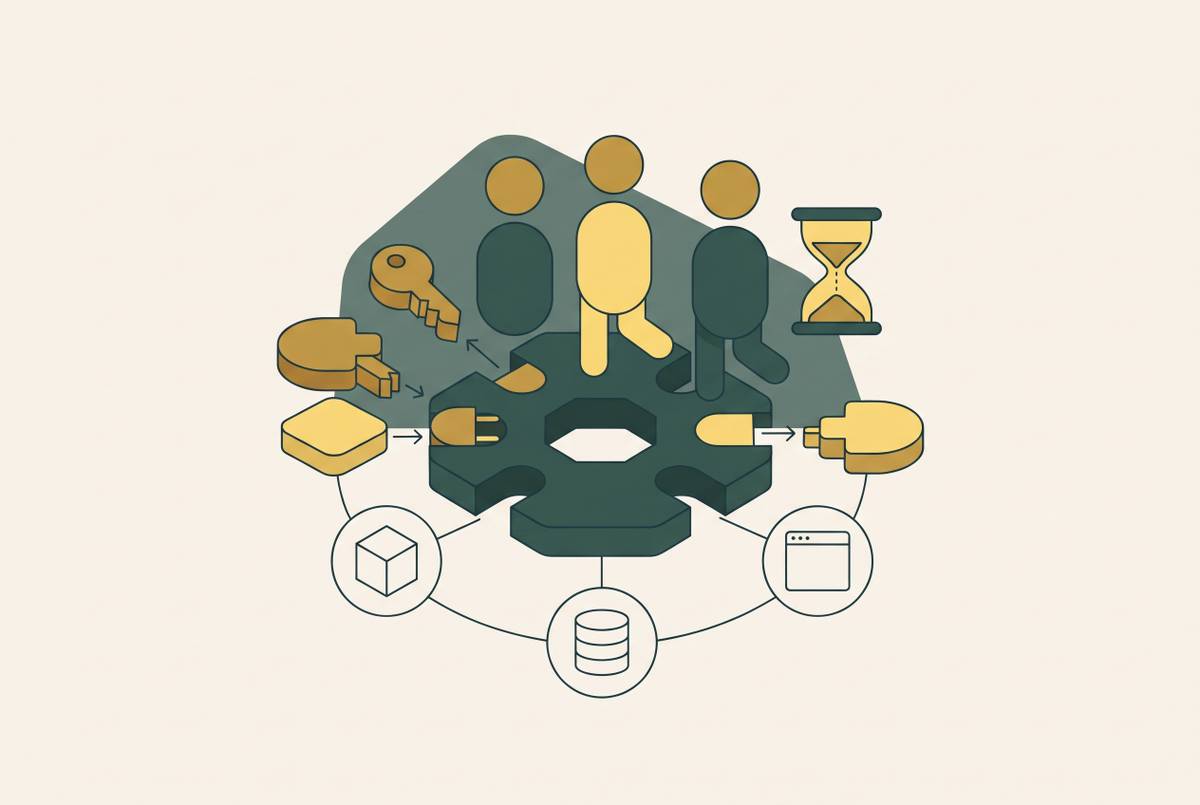
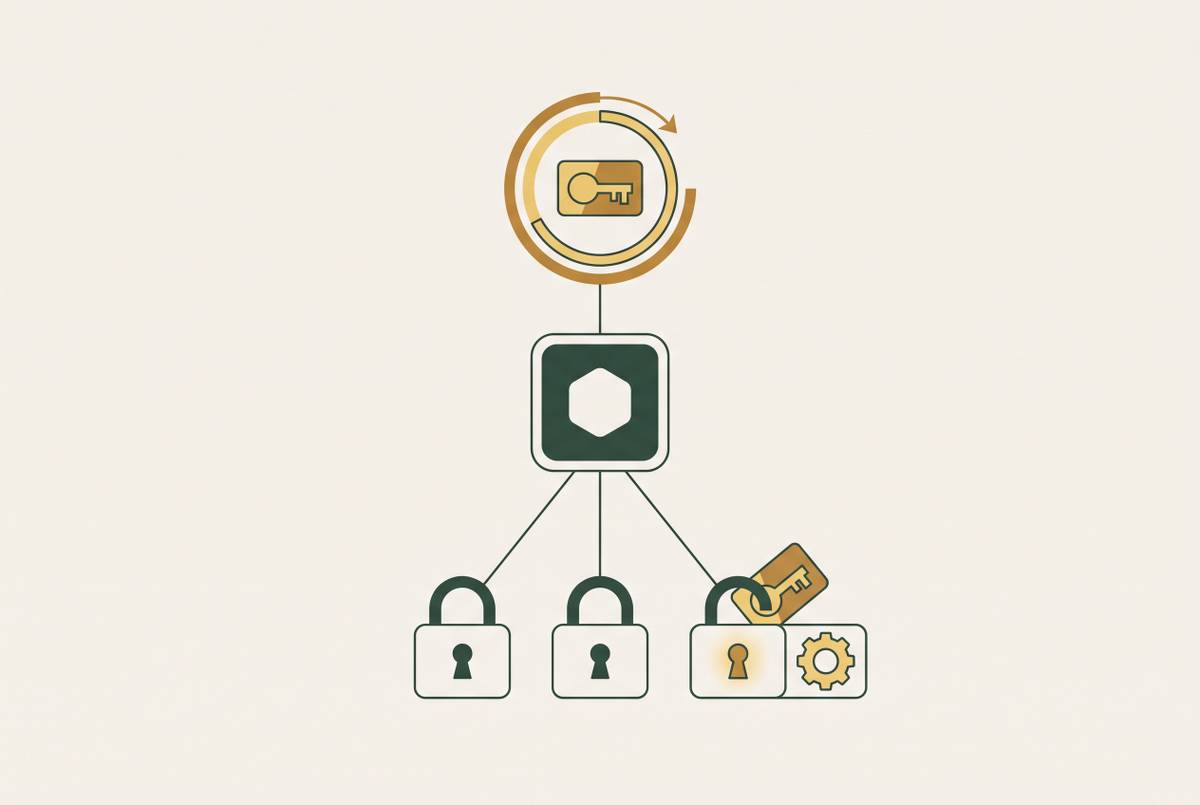
The credential architecture separates storage, mediation, and issuance. A vault stores secrets encrypted at rest with short lifetimes. A local proxy holds the credential and injects authentication server-side, so the agent never receives a reusable secret. A broker issues credentials for the specific tool call and operation, with expiration at session end. Each layer has a distinct job.
Meaningful scoping depends on meaningful identity. Agents need owners, lifecycles, attestation, and revocation paths in IAM rather than anonymous access through borrowed human tokens. SSO and SCIM integration link actions to verified people and their organizational roles. This completes the control chain established by federation, namespaces, and policy-as-code. The credential grants only the permitted operation for the permitted period, rather than leaving broader access available after the task ends.
How do platform teams manage MCP access without rebuilding auth for every AI project?
The platform team manages a shared policy layer instead of rebuilding authentication and access plumbing for each agent. Its unified view contains registered MCP servers, skills, and agents across delegated domains. For governed calls, the record connects the agent, responsible human identity, policy decision, and result. Ownership can be traced from the operation back to a business owner.
Tracing also extends beyond individual HTTP requests. OTEL tracing follows the agent execution chain and records how long tool calls take and what their results are. Audit records come from the enforcement plane rather than the agent, so the agent cannot alter its own evidence. Local enforcement does not require fragmented investigation. The central view brings together the records from the gateways.
Because the proxy sits in the data path, it can detect tool-description drift, flag anomalous instructions in tool arguments, and expose response volumes and destinations relevant to exfiltration. Tool-call sequences can also reveal deviations from an agent’s declared purpose. These capabilities are concrete criteria for judging a unified control plane. More of the operating cost goes toward keeping shared policy up to date and dealing with exceptions, while routine authorization and the collection of evidence take place as calls run.
Applying the patterns and tracing authority across teams
A new team receives a registry namespace with a named owner, its MCP servers, agents, and credential bindings. The organization-wide baseline applies automatically, including authentication, audit logging, tool-description validation, and restrictions on lateral access. The team then defines tool-specific rules and approval gates within those bounds. Its gateway enforces locally and sends telemetry to the shared control plane. Platform involvement centers on approving the namespace and verifying its owner.
When a parent agent in Team A’s namespace calls a tool in Team B’s namespace, an explicit policy grant is required. Access is not inherited merely because both teams use the same infrastructure. The receiving tool or child agent gets credentials scoped to that operation, with permissions that narrow or remain equal. Each delegation records the identity, permitting policy, and result.
The four patterns therefore work as a layered system. Security and IT become the people who make enterprise AI adoption possible at scale.
Sources
- AGL-1: The Enterprise AI Governance Layer as a Control Plane for Trusted Enterprise Intelligence
- The Authority Resolution Framework: A Five-Domain Ontology for Governing Who and What Decides, at Scale
- Model Context Protocol (MCP) Security
- Model Context Protocol Threat Modeling and Analyzing Vulnerabilities to Prompt Injection with Tool Poisoning