Why Governance Architecture Determines Whether Enterprise AI Agent Access Scales or Stalls
Central identity, scoped credentials, and per-action checks let AI agents scale.
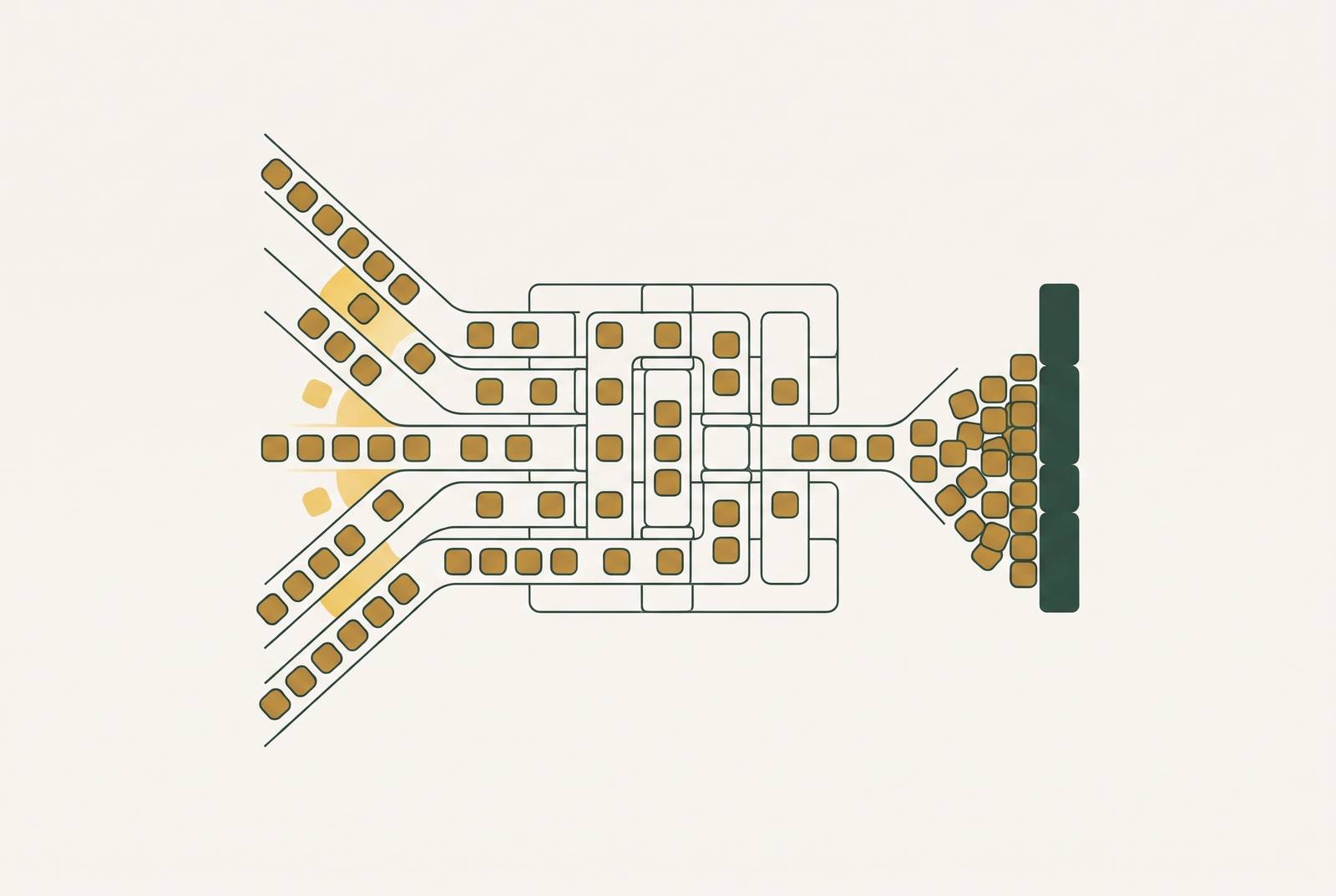
Enterprise AI agent access scales when identity, permissions, and oversight are built into the infrastructure before deployment. To give thousands of non-technical employees access without overwhelming IT, enterprises need a central platform with approved tools, task-bound credentials, and controls that check each action an agent takes. The decisive choice is architectural, because the same foundation that protects enterprise systems also removes the need for every employee to understand how access works.
Why AI agent access stalls at the pilot stage despite high adoption intent
Broad adoption intent has not translated into broad production success. Enterprises are eager to deploy agents, yet most never move from pilots to scale. Deloitte’s 2026 State of AI in the Enterprise report found that most organizations plan to deploy agentic AI within two years, while only a small fraction have a mature agent governance model. The ambition is ahead of the operating model. That gap becomes visible when a promising pilot needs access to real enterprise systems.
At that point, missing identity management, audit layers, and approval workflows become deployment blockers. Granting an agent write access requires more than evidence that it can complete a task. Security teams need to establish whose authority it uses, which actions are allowed, and how those actions can be reviewed.
What the production gap actually signals — a governance architecture problem, not a technology one
The Cloud Security Alliance treats AI agents as their own class of privileged identity, apart from both human users and traditional service accounts [7]. Agents act on behalf of people, but their permissions can exceed those of the people they represent. A working agent can therefore be a successful technical demonstration and an unacceptable production risk at the same time.
Each Model Context Protocol (MCP) server gives an agent another connection into enterprise systems, and each exposed tool gives it another action it can take with enterprise credentials. Without governance at that layer, permission to connect becomes a poor substitute for permission to act. The controls are in the wrong place. Security teams may have hardened APIs and endpoints for years, while the tool layer between an agent and a database has little of that protection by default.
The failure pattern is missing identity, permissions, and oversight in the agent infrastructure itself. Adding more agents to that arrangement expands the set of privileged actions without establishing how those actions will be governed.
The specific attack surface MCP creates when agents are deployed without governance controls
The Alliance’s May 2026 research note identifies tool poisoning, cross-server tool shadowing, STDIO command injection, and rug pull attacks as core MCP threats [1][2][4][20][23]. Tool poisoning puts malicious instructions in tool metadata that the model reads but users never see. Cross-server tool shadowing lets a malicious server weaponize adjacent trusted servers. Trust in one connection can affect another. A rug pull exploits approval over time, presenting benign tools first and silently changing their definitions in later sessions.
STDIO command injection exposes a different failure mode. The transport executes operating system commands without sanitization, allowing remote code execution on vulnerable hosts. The research note describes this as a design default in every official MCP SDK, with remediation left to downstream developers. Approval of a server cannot substitute for controls over what its tools can execute.
Invariant Labs’ GitHub MCP disclosure illustrates how broad permissions can turn ordinary content into an attack path. An agent with elevated repository access processed a public GitHub Issue containing instructions to expose private repository code. Its broad personal access token gave it the authority it needed. No stolen access was needed for that path. Conventional WAFs, API gateways, DLP tools, and SIEMs evaluate traffic, but were not built to judge the intent behind an agent’s tool call before it executes.
Why the MCP specification’s own authentication evolution does not close the governance gap on its own
The MCP authorization specification has moved toward tighter control over connections. Its July 28, 2026 revision tightened mandatory OAuth 2.0 Protected Resource Metadata (RFC 9728), which had been required since June 2025. It also required the resource parameter on authorization and token requests and mandated that servers reject tokens not issued for themselves. Enterprises should follow these requirements even when they have architectural governance in place.
The June 2026 Enterprise-Managed Authorization (EMA) extension adds centralized identity-provider control over which users can connect to which servers. The official MCP announcement says Okta is the first identity provider it supports, using Cross App Access. That reduces the burden of separate consent decisions for each server. But its authority has a clear limit. Its authority is limited to the connection and its scope.
Session-scoped authorization also points in the right direction, toward authority that expires with the task. This is especially useful when one agent flow touches several systems. Full specification compliance still supplies no native defense against tool poisoning, no behavioral monitoring after token issuance, and no cross-agent audit trail. Those remain enterprise architecture decisions.
What governance architecture actually requires — identity, permissions, and oversight wired in at the foundation
BCG’s Enterprise AI Control Plane framework defines four shared capabilities, including central identity, an agent-and-tool registry, real-time policy enforcement, and deployment templates. The registry addresses the first practical failure, which is visibility. It records which MCP servers exist, what they expose, and which teams have approved them. Unknown connections cannot be governed with confidence. An authoritative inventory gives approval workflows a defined set of tools and servers to work with, rather than leaving each team to maintain its own picture.
Central identity then ties every agent action to a human identity through SSO and SCIM. This addresses the privilege gap between the agent and the person it represents. Connection approval is only the starting point. Real-time policy enforcement must operate at tool-call depth because a valid token can still support an inappropriate action, as the GitHub case demonstrates. The relevant decision is whether that action is allowed.
Credential handling belongs in the same foundation because MCP servers often hold credentials for more than one enterprise system. Issuance and scoping must work at the tool level, rather than relying on static keys in configuration files. Authority should expire with the work it permits. Just-in-time credentials issued for a specific task address the durable-credential path to lateral movement. Deployment templates then package these controls into pre-governed “golden paths,” so each team can reach production without rebuilding identity and access from scratch.
How audit logging and behavioral monitoring become load-bearing elements in multi-agent environments
Static access controls cannot explain how several agents arrived at a decision together. In a multi-agent system, each agent may hold only part of the action chain, so no single log captures the whole decision. The evidence is fragmented by the architecture itself. Tamper-proof, cross-agent audit trails must therefore be designed into that architecture. The same fragmentation complicates Article 12 compliance because evidence of the complete decision is not naturally contained in one record.
Behavioral monitoring checks for a different weakness, the gap between the access an agent was approved to use and what it actually does. The GitHub injection shows why a valid credential does not establish that an action serves the intended task. Rug pulls likewise show how a tool’s definition can change while its approval stays in place. Monitoring at tool-call depth is positioned to detect these changes in conduct, while cross-agent records make the resulting chain available for review.
NIST launched its AI Agent Standards Initiative on February 17, 2026, covering industry-led standards, community-led open-source protocols, and research in agent security and identity. OWASP’s MCP Top 10 project gives concrete scope to the risks that controls and telemetry must address, including token mismanagement, scope creep, tool poisoning, command injection, and lack of audit. Cyber-insurance underwriters have begun leaving AI-related incidents out of default policies unless organizations can show they have reasonable technical measures in place. Audit logs and behavioral monitoring are becoming evidence that can affect coverage.
The Mexico government breach described in the research involved exposed credentials being used against live systems before logging surfaced the first event to a defender. The action had already outrun the alert. Tool-call monitoring is positioned closer to the action than perimeter logging, making it a structural part of the response to that speed gap.
Why fragmented governance stacks accumulate the costs that stop scaling
A separate agent builder, API gateway, and security tool do not by themselves form a governance architecture. If they do not share identity, enforce policy at the same layer, or produce a unified audit record, platform engineers must bridge those gaps. Every deployment inherits that integration work again. As agents spread across platforms, business units, and use cases, the cost of rebuilding credential handling and access plumbing can compound faster than the value delivered.
When the governed route takes weeks and an ungoverned connection takes hours, teams have a strong reason to choose the latter. Shadow MCP usage then recreates the visibility problem that the registry was meant to solve. If access requires understanding OAuth flows, MCP configuration, and credential scoping, most non-technical staff cannot use the governed route at all.
BCG’s 2026 analysis of enterprise AI agents in regulated industries offers a concrete contrast. Companies that used common platform approaches reported 25% gains in productivity across the software development life cycle. Those approaches shared orchestration, model access, evaluations, guardrails, security, and monitoring. The finding applies specifically to a common platform. It supports the operational case for shared capabilities, although it does not establish the same gain for every workforce use case.
How can enterprises give non-technical employees AI agent access without overwhelming IT?
A governance-first platform makes security and IT the providers of a reusable access path. Pre-governed golden paths put identity, monitoring, and policy enforcement in place before a team begins using an agent. Governed setup can shrink from weeks to a single day. The employee does not need to understand the underlying credential model because the platform supplies it.
Central identity must connect people to agent actions, while a tool registry and approval workflows establish which connections are allowed. Task-bound credentials limit how long authority persists. Real-time enforcement and behavioral detection address conduct after authentication, while tamper-proof audit records reconstruct actions across agents. A convenient interface without those capabilities simplifies entry while leaving agent access ungoverned.
The organizational work remains unfinished even where the technology is available. Deloitte’s report found that the vast majority of companies have not redesigned jobs around AI, despite broad plans for agent adoption. There is still time to build governance first. Once access has spread beyond visibility, however, the same controls must be retrofitted across a larger and less understood environment. Enterprises deciding how to enable non-technical employees are therefore choosing not whether governance will constrain deployment, but whether its architecture will make safe deployment routine.