Decentralized Ownership Models That Keep AI Agent Access Scalable Without IT Gridlock
Business units own agents while central controls enforce identity, policy, and audit trails.
Rolling out AI agents to thousands of non-technical employees requires federated ownership. Business units should own their agents and workflows, while the central infrastructure enforces identity and access policy and makes every tool call auditable. That split makes enterprise AI agent enablement scalable without asking business users to become security experts or letting teams bypass controls.
Why AI agent access breaks down at enterprise scale
Business units are adopting agents faster than central IT can review them. When every team has to wait in the same approval queue, even everyday choices need someone’s attention. Work backs up, or teams work around it. AI sprawl follows, with parallel projects duplicating effort and applying inconsistent controls.
Removing the queue without replacing its controls creates a different problem. The Model Context Protocol, or MCP, connects agents to tools and data, so an ungoverned connection is also a potential attack surface [1][2][3]. With pure decentralization, each unit sets its own security boundary even when its agents reach beyond it. Pure centralization makes IT responsible for decisions that require local knowledge.
What the federated model actually means — and what it is not
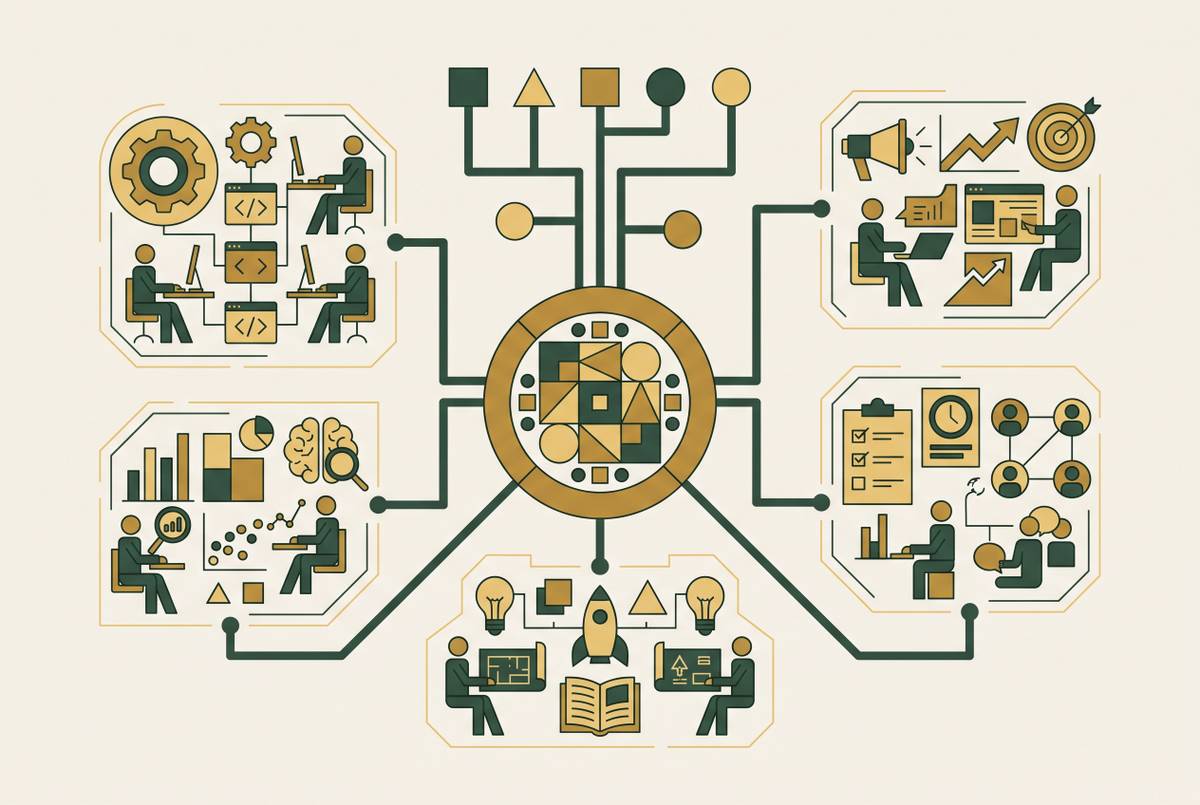
The hub-and-spoke federated model separates enterprise rules from local operations. The hub sets standards, keeps the shared agent registry up to date, sets the minimum requirements for security and compliance, and runs the AI Governance Council. It also enforces those requirements through shared infrastructure. It provides the conditions under which units can act independently.
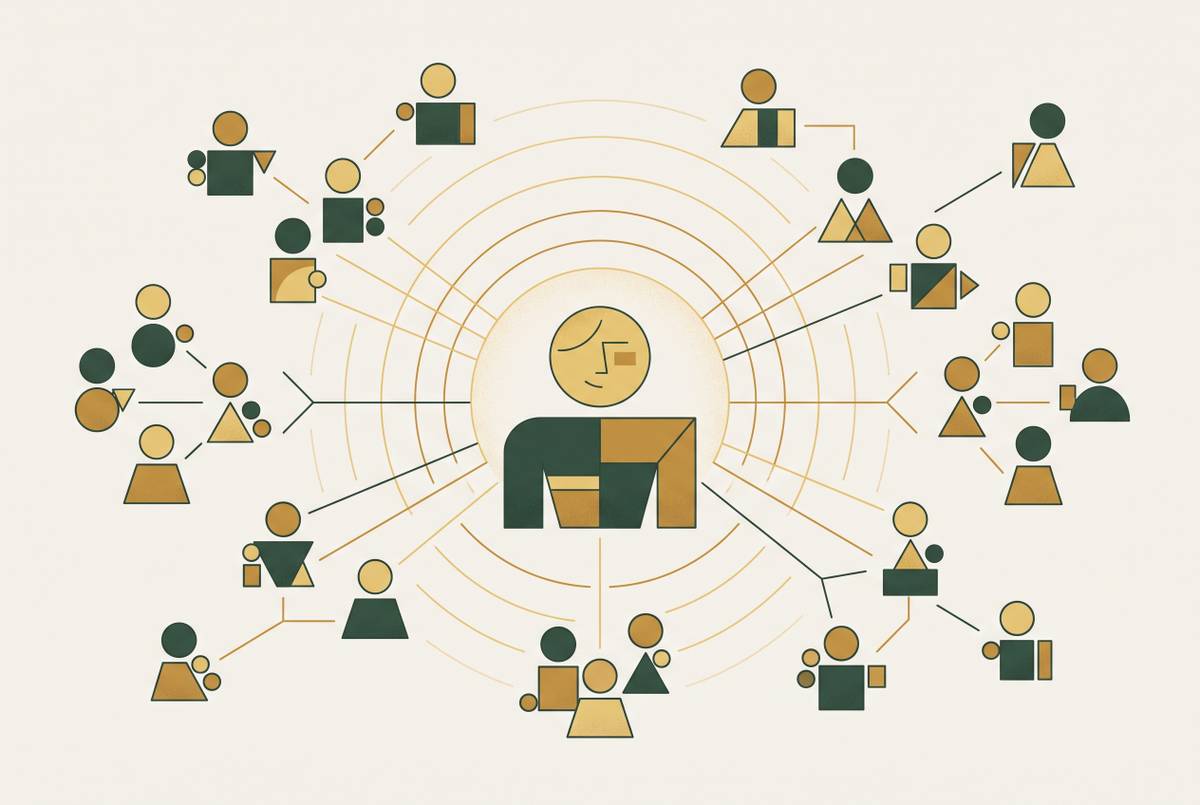
At each spoke, a business unit owns and operates its agents. A named Agent Governance Lead participates in the council and is accountable for compliance within the unit. That gives local decisions a connection to enterprise standards without sending every configuration change through IT. Local knowledge stays close to the work. Accountability stays attached to a named person.
This is not shadow IT with paperwork added later. The foundation must have identity controls, policy enforcement, and audit infrastructure that work. Cloud Security Alliance’s MCP Security research reinforces that distinction by treating every MCP server as an untrusted third party [1][2][3]. A unit’s confidence in a tool cannot replace an enterprise-wide enforcement point. Governance titles alone cannot provide that control.
What must stay centrally controlled and why it cannot be delegated
Three controls belong at the center regardless of local autonomy. They are agent identity, access policy at the tool-call layer, and the audit record. Machine identities already outnumber human identities by a large margin, and AI adoption accelerates that imbalance. Yet many technical teams still use shared API keys for agent-to-agent authentication. Without central identity, the enterprise cannot reliably establish which agent acted on whose behalf.
Access policy must reach deeper than the network perimeter. Conventional WAFs, API gateways, DLP tools, and SIEMs cannot evaluate the intent behind an agent’s tool call before execution. General Analysis documented a Supabase MCP incident in which an agent with legitimate access received a malicious instruction in a support ticket. The traffic itself was valid, so perimeter controls were not positioned to stop it. The GitHub MCP indirect injection followed the same pattern of elevated access and external content treated as instruction.
Those attacks used the agent’s intended access. They did not require credential theft or network intrusion. Central enforcement therefore has to constrain what an authenticated agent may do. The audit record must also stay central because records kept by each unit cannot show the full story of activity that crosses business boundaries. Otherwise, it becomes hard to trace who was responsible just when an investigation needs that trail.
The MCP attack surface that makes central enforcement non-optional
MCP-connected agents can read instructions in places where conventional security controls do not expect to find anything that can be executed. Tool poisoning hides malicious instructions in the tool descriptions that the model reads. Invariant Labs demonstrated this mechanism in Cursor IDE, where hidden instructions exfiltrated SSH private keys without the user’s knowledge. The malicious instructions were truncated from the interface. The attack came through metadata, with no network request that looked clearly hostile.
Support tickets, GitHub Issues, and emails can contain instructions that an agent mistakes for authority. The EchoLeak attack on Microsoft 365 Copilot, CVE-2025-32711, required only a crafted email to silently exfiltrate email summaries, calendar data, and documents. No user click was needed for the attack.
The exposure also extends below individual workflows. CSA’s research documents that MCP authorization is optional, leaving servers exposed without authentication. OX Security disclosed a flaw in April 2026 that stemmed from a design default in every official MCP SDK and thus went beyond a bug in one product. Local configuration cannot contain every shared dependency risk.
Agent-to-agent escalation makes the organizational boundary equally weak. A compromised low-privilege agent can send disguised requests to a higher-privilege agent across units. The Azure DevOps MCP authentication bypass, CVE-2026-32211, with a CVSS score of 9.1, also allowed access to API keys and tokens without credentials. These attacks call for central identity and policy enforcement, plus a central team that keeps track of MCP vulnerabilities.
How can business units give non-technical staff agents without overwhelming IT?
Business units should own decisions that depend on their work. They define an agent’s purpose, the workflows it supports, and what success looks like. The center enforces the conditions under which any use case runs. This lets local teams pursue useful agents without turning IT into a business-priority committee.
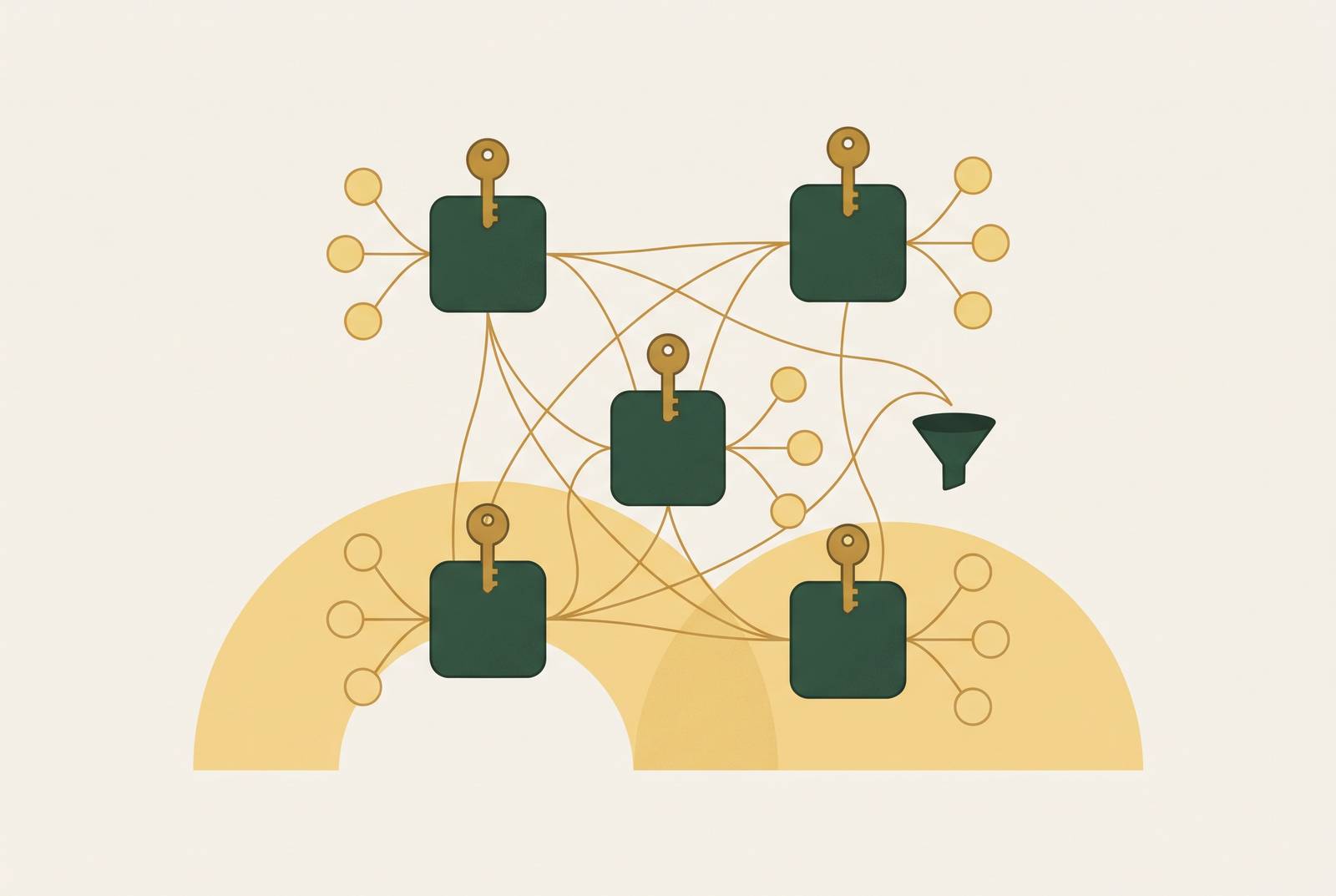
Tool selection follows the same boundary. The center maintains the approved catalog of MCP servers, while units configure each agent’s tool allowlist from that catalog without a central ticket for every choice. The center still decides whether to change the approved catalog. Selecting an already approved subset is local.
Every agent also needs a named human owner in the business unit. That owner remains accountable for behavior, scope creep, maintenance, and retirement, rather than treating launch approval as the end of governance. Exceptions are possible, but they remain bounded. They go through the Agent Governance Lead under central exception-approval rules, have an expiry, and appear in the shared registry. The unit owns both the exception request and the remediation when it expires.
How to operationalize the boundary — identity, credentials, and policy enforcement in practice
To put this split into practice, the center must provide controls that units cannot bypass. Each agent needs its own identity tied to a human owner, with SSO and SCIM synchronizing identity across the enterprise directory. A shared service account does not meet that requirement. Neither does a team API key. Identity binding is what makes individual permissions and accountability possible.
Microsoft Agent 365, generally available from May 1, 2026, has a single control plane for managing agents, built on Microsoft Entra Agent ID. This foundation lets teams manage agent identity, lifecycle, and access, and it works with Conditional Access. Microsoft Purview for Agents adds a separate layer for data security alongside it.
Auth0’s “Auth for MCP” became generally available on May 6, 2026. Okta also released an MCP server that exposes scoped management APIs, using scope-based tool loading to enforce least privilege. These capabilities address different parts of the problem. For enterprise deployment, the relevant criteria are agent identity, scoped access, lifecycle management, and enforceable tool policy.
The MCP specification requires OAuth 2.1 with PKCE for HTTP-based deployments that implement authorization, including HTTPS and discoverable authorization server metadata. Authorization itself remains optional under the specification. The central gateway must enforce what the protocol leaves optional. Credentials should then inherit scoped user permissions through just-in-time issuance rather than standing access, with existing PAM tooling extended to machine identities where practical.
The gateway enforces per-agent tool allowlists and gives security teams one inventory of MCP servers, skills, and agent connections. Destructive or irreversible actions must pause for a named human’s approval, including financial transactions, data deletion, and external communications. Routine actions need not all stop for review. Every tool invocation must log authenticated user identity, MCP server, tool name, full arguments, hashed result, timestamp, and correlation ID to a write-once system. Tamper-proof logs and full OTEL tracing make those controls auditable.
The compliance obligations that arrive whether the governance model is ready or not
Regulatory frameworks are converging on human accountability, documented access controls, audit trails, and oversight of high-risk actions. These are reasons to make the ownership split enforceable and documented. A registry identifies the agents, named owners establish responsibility, and logs record what happened.
The EU AI Act places high-risk systems, including agentic systems in hiring, lending, healthcare, law enforcement, and critical infrastructure, under requirements for conformity assessment, technical documentation, CE marking, and human oversight. High-risk obligations for stand-alone systems apply from December 2, 2027, deferred by the Digital Omnibus on AI. Most enterprise agent teams are deployers. Deployers still have major duties to meet even when another organization built the underlying AI.
The NIST AI Agent Standards Initiative, launched February 17, 2026, places identity at the center of its work. Its companion concept paper on agent identity and authorization was published February 5, 2026. That emphasis maps directly to centrally bound agent identities. Mapping NIST AI RMF, the EU AI Act, and ISO/IEC 42001 together also connects the registry, ownership, audit logs, and policy controls to a broader governance framework. Building that foundation now prepares organizations for scrutiny.
The objection — does federated ownership just move the governance gap rather than close it?
The strongest objection is that federation can distribute responsibility without distributing the means to meet it. A business unit gets an Agent Governance Lead, but the lead has no effective way to enforce access rules or inspect agent activity. The council meets, while deployment outruns control.
IBM’s 2026 CEO study found that a large majority of enterprises now have a Chief AI Officer. Yet governance adequacy remains far behind the growth in leadership roles. The distinction is important for federation because its structure can look complete before its controls work. A named owner cannot compensate for a missing identity layer. Nor can a council substitute for a mandatory gateway.
The gateway must exist and be mandatory before units get self-service access, and the registry must be populated and current. Identity infrastructure must precede scoped permissions and just-in-time credentials. Without those foundations, decentralization merely relocates the gap. With them, the center controls the rules while units control work inside those rules.
How to sequence the transition from IT-gated to federated agent access
The transition should begin with an internal agent inventory. Map which agents exist, which MCP servers they connect to, and who is accountable for each. Include shadow MCP usage in that discovery. This registry gives the council connections to govern and exposes unresolved responsibility where owners are missing.
Once that inventory is in place, build the enforcement layer before giving units self-service access. Deploy the central MCP gateway, establish OAuth 2.1, SSO, and SCIM, and configure write-once audit logging. These are prerequisites, not later cleanup work. They turn the inventory into a foundation on which permissions and activity can be controlled.
Once those controls work, publish a clear account of who owns what. The center owns the tool catalog, identity policy, audit standards, and exception approval, while units own use-case selection, per-agent allowlists, and named ownership. Appoint each Agent Governance Lead before independent deployment begins.
Finally, make delivery a lifecycle with gated progression through development, baseline review, production monitoring, and retirement. Enforce least-privilege credentials and human approval for irreversible actions at the gateway. Autonomy follows the controls that make it safe. The goal is for business units to use agents without having to choose between moving fast and staying governed.