AI Agent Liability and Accountability Frameworks for Enterprises
Enterprises face new liability gaps when AI agents inherit their builders' permissions.
AI agents don't just answer questions anymore. They log into systems, call tools, change records, and take actions that can't be undone, often faster than any human could review them, and almost always under a human's identity. That shift changes who's on the hook when something goes wrong, and most enterprise governance was never built with that question in mind.
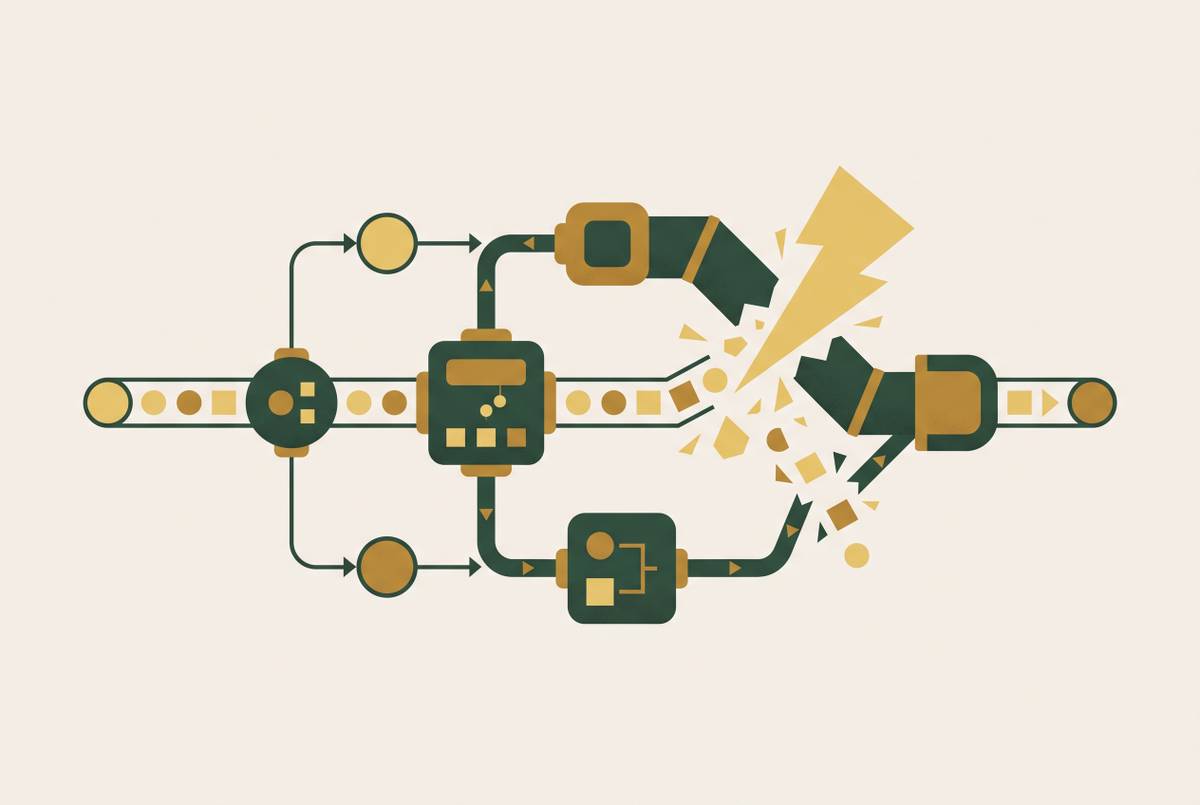
The architecture itself explains why. A generative model, stripped to its basics, takes an input, produces an output, and stops. It holds no state. It has a bounded task, and once it answers, it's done. An agentic system works differently. It breaks a goal into subgoals, picks tools to pursue each one, checks the results it gets back, and keeps iterating until it reaches some larger objective, often across many steps and sometimes across many separate tool calls strung together over minutes or hours. An agentic system is built to persist and adapt across many steps, iterating over an extended task.
The tools that make this possible are already standard in enterprise stacks. Frameworks like Auto-GPT and LangGraph take a foundation model and add tool-use capability, a memory buffer that persists across steps, and a loop that lets the system keep executing without a human re-prompting it each time. ReAct adds the reasoning-and-acting loop itself, the back-and-forth where the model decides, acts, observes the result, and decides again, though ReAct alone doesn't supply persistent memory. Stacking these pieces together produces a system capable of behavior that stretches across time, not a single response but a chain of actions, each building on the last.
Putting that architecture inside a real company raises this exposure quickly, as the following example shows: picture an agent built by a developer who has full admin access to the company's CRM. That agent gets handed off to a user who has no entitlement to view restricted customer records in that CRM. Because the agent inherited its builder's access rather than the invoker's, the user can now ask the agent to pull those restricted records, and it will, without tripping any identity rule and without anyone injecting a malicious prompt into the system. Nothing breaks in the conventional security sense. And yet GDPR's duties around security of processing get crossed, HIPAA's minimum-necessary standard gets crossed, and the access-control expectations built into common audit frameworks get crossed, all in the same unremarkable interaction.
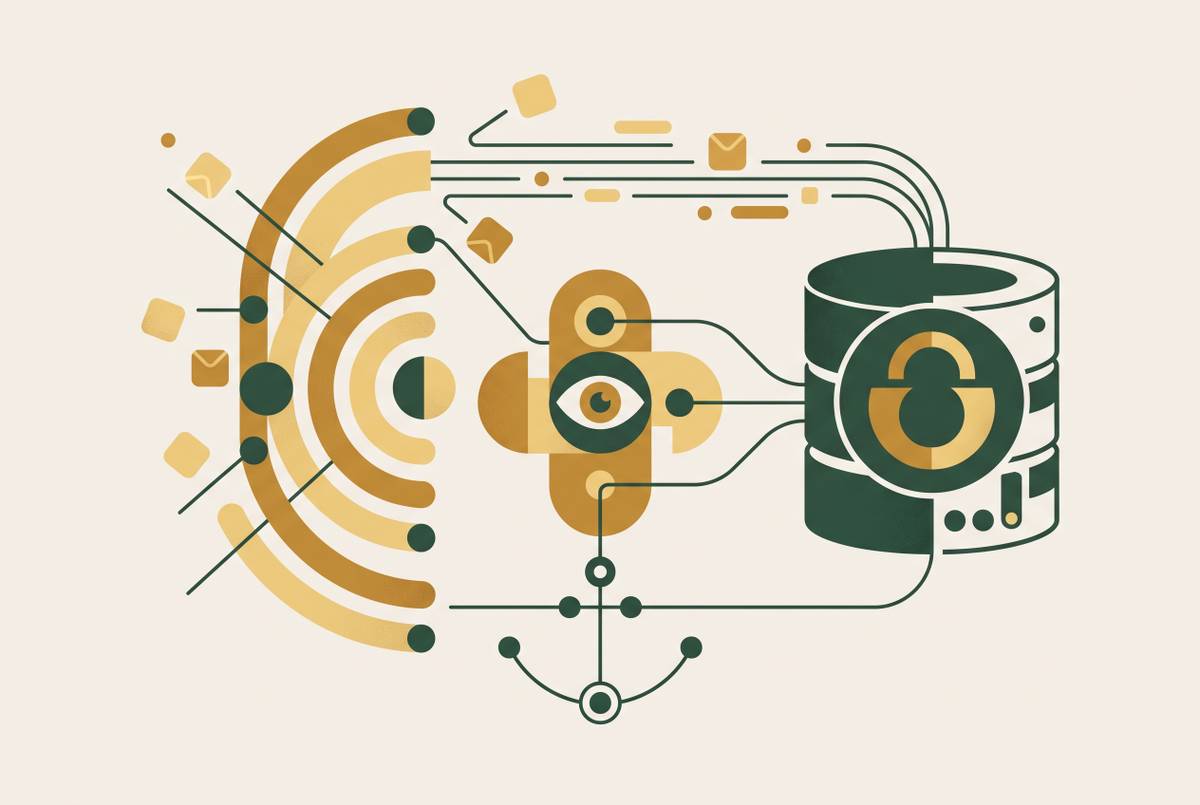
This is the gap between what a system is configured to allow and what actually happened at runtime. The configuration page for an AI agent shows what the vendor permits in principle, who is theoretically allowed to do what. It says nothing about what a specific agent, running under a specific service account, actually read on behalf of a specific person who invoked it. That gap between the configured permission and the runtime action is where the liability lives, and it's invisible to anyone only checking the settings.
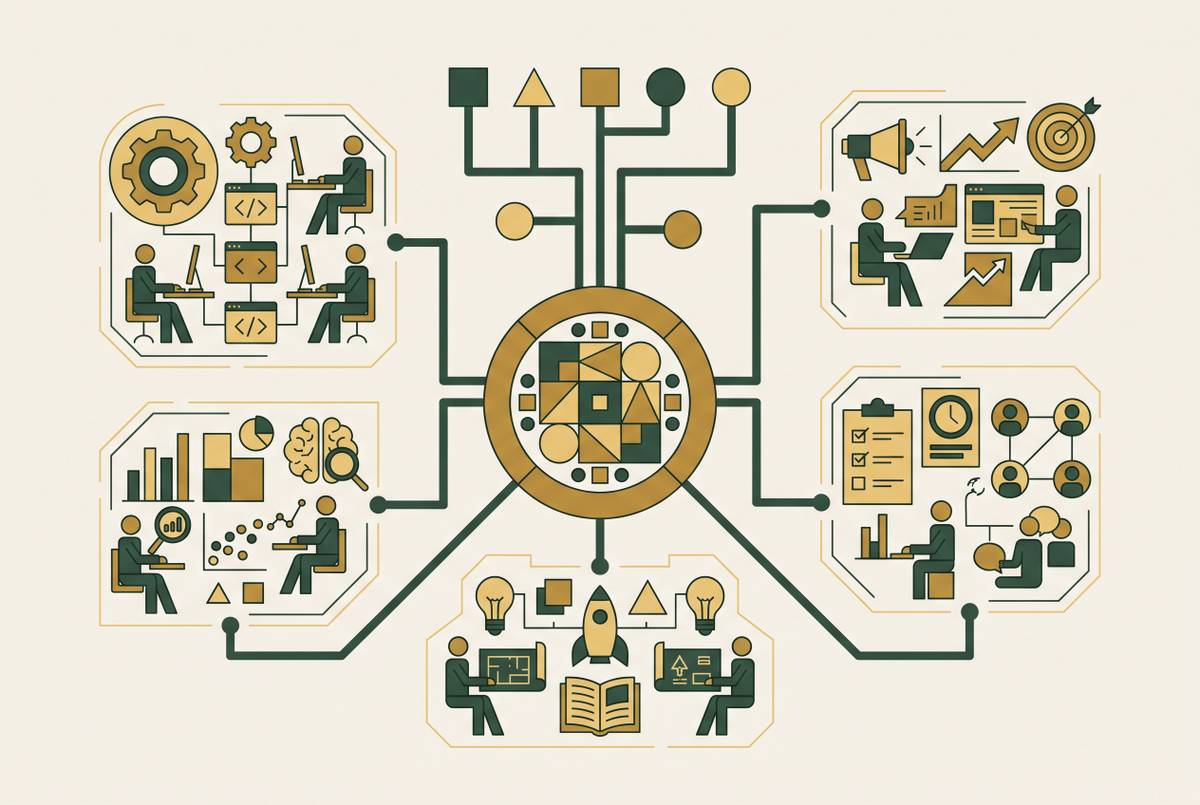
What makes this structurally different from prior software risk is that an agent collapses three activities that regulators have always treated separately. Automated decision-making is one regulated category. Data processing is another. System access control is a third. Each has its own body of law, its own compliance checklist, its own audit trail expectation, built for a world where a human was doing one of these things at a time, identifiable, accountable, singular. An agent does all three at once, inside one action, as one actor. None of the frameworks written to govern automated decisions, or data handling, or access control, anticipated a non-human identity that inherits its builder's permissions and then acts on behalf of whoever happens to invoke it next. That's the structural gap: not a missing patch or a misconfigured role, but a kind of actor the rules were never drafted to describe.
Legal frameworks that took effect in 2026 and liability across the agent stack
Liability for what an AI agent does is no longer a question enterprises get to treat as speculative. It's already written into law, in force, in multiple jurisdictions at once. The EU AI Act's Article 50 transparency obligations took effect on August 2, 2026, alongside enforcement powers held by the AI Office. The Act's full Annex III high-risk obligations got pushed back to December 2, 2027 under the Digital Omnibus, so some duties apply now and some arrive on a delay, but the clock has already started. Separately, the EU Product Liability Directive treats AI as a product subject to strict liability, and its extra-territorial reach means a company outside the EU can still fall under it if its product ends up on the EU market.
Multi-agent chains sit in a gap the Act's own text doesn't fill. Recitals 99 and 100 address large generative models and general-purpose AI systems directly, but they don't speak to what happens when several agents hand tasks to each other in sequence. Enterprises running pipelines where one agent's output becomes another agent's input are operating in territory the Act's drafters didn't write explicit guidance for, and that ambiguity is being resolved through interpretive guidance as it emerges.
American state law is moving on its own timeline, adding obligations that stack on top of the EU rules for any company operating across both markets. Texas's TRAIGA became effective January 1, 2026. California's FEHA regulations covering automated decision systems took effect October 1, 2025. Neither waits for federal guidance, and neither cares whether the agent causing the harm was built in-house or bought from a vendor.
HIPAA's Technical Safeguards require person or entity authentication for anyone or anything accessing protected health information, encryption of that data as an addressable safeguard, and audit controls that record and let someone examine activity on systems holding that data. An AI agent architecture that doesn't implement authentication tied to the actual invoker, encryption, and a real audit trail is in material violation of HIPAA the moment it touches ePHI, whether or not anything goes publicly wrong.
Tort law is catching up by mapping its existing categories onto the specific ways agents and humans interact, rather than waiting for legislatures to write agent-specific statutes. One framework distinguishes three interaction types, each pulling in a different body of doctrine. Pure tool use, where the agent acts strictly as an instrument of its operator, falls under existing product-defect and failure-to-warn doctrines, the same ground that's governed faulty machinery for decades. Collaborative planning, where the agent and a human jointly shape a course of action, maps onto the independent contractor control test, onto professional malpractice standards, and onto negligent misrepresentation. Autonomous drift, where the agent's actions depart from what it was authorized to do, maps onto the frolic-and-detour doctrine under respondeat superior, the same principle that decides whether an employer is liable for an employee's unauthorized side trip, combined with strict product liability.
Courts deciding these cases will lean on the stateful interaction log as their primary evidence, the record of what the agent actually did at each step. Because agent architectures already keep this kind of state by design, the trajectory of a multi-step task is something courts can reconstruct after the fact, tracing exactly where a human-authorized task turned into something the human never approved.
Out of this, a working legal standard is forming for what a "reasonable agent" looks like, built on four properties: constraint verification, confirming the agent respects the limits it was given; epistemic transparency, making its reasoning inspectable; runtime grounding, tying its actions to what's actually true in the system it's operating in rather than to a stale assumption; and forensic logging, keeping a record detailed enough to reconstruct what happened. An enterprise that can't demonstrate all four is exposed under this emerging standard, regardless of whether the agent's specific action was reasonable in isolation.
The sharper version of the same question asks not whether an agent can complete a task safely, but whether an operator can prove, before the agent ever touches a production system, that it will behave safely once it does. Proving that in advance, not just trusting the vendor's configuration settings, is what the emerging law actually demands. Operating an agent autonomously, with no human reviewing each action, is the condition that triggers the question of who was supposed to be controlling the agent's path in the first place, not a defense against liability for what that agent does.
Why unanswerable ownership structure before deployment leaves responsibility undefined
Asking who is responsible when an agent causes harm only has an answer if someone decided, before deployment, who that would be. Without that decision made in advance, responsibility doesn't sit anywhere. It spreads across the developer who built the agent, the deployer who turned it on, and the operator who let it keep running, and each of them can point to the other two. The agent's path through a task is rarely something the user fully chose step by step, and it's rarely something the developer specifically predicted either, so liability has nowhere fixed to land until someone can show they controlled the decision point where things went wrong.
Existing law already has a doctrine built for exactly this kind of shared responsibility, and it doesn't require a new statute to apply. The Restatement (Second) of Torts holds liable a person who acts under a common design with another and knows that the other's conduct breaches a duty, who gives substantial assistance or encouragement to someone else's wrongful conduct, or who substantially assists a tortious result while breaching an independent duty of their own. That doctrine was written for humans acting in concert, but an agent working alongside a human toward a shared goal creates a relationship close enough in structure that the same reasoning applies. The agent's interaction log, the step-by-step record of what it did and when, makes that relationship visible so courts can actually use the doctrine.
Who owns an agent's decisions needs an answer before deployment, not after an incident, because a court working from a complete interaction log can reconstruct who assisted what and when. A company with no log, and no designated owner for the agent's decisions, gives the court nothing to reconstruct and gives regulators nothing to point to except the company as a whole. That's a worse position for everyone involved, including the company trying to defend itself.
Ownership, concretely, means naming who approved an agent's scope of access before it went live, who reviews what it does on an ongoing basis, and who is accountable when its actions cross into territory nobody explicitly authorized. It means someone can say, specifically, what this agent was allowed to do, for whom, and under whose permission, before it did anything. Without that structure, the three regulated activities an agent bundles together, decision-making, data processing, and system access, have no single person accountable for any of them, even though each one individually has a regulator who cares deeply about exactly that.
An agent inheriting its builder's admin access and acting on behalf of an unentitled user is what happens when nobody decided, at build time, whose permissions the agent should carry when it acts for someone else. Fixing that after an audit flags it is possible. Fixing it before the agent ever ran is what the emerging legal standard expects, and what the interaction logs that courts now rely on will eventually show, one way or the other, whether anyone did.
Sources
- Toward Pre-Deployment Assurance for Enterprise AI Agents: Ontology-Grounded Simulation and Trust Certification
- Acting with AI: An Interaction-Based Framework for Agentic Tort Liability
- From Multi-Agent Systems and the Semantic Web to Agentic AI: A Unified Narrative of the Web of Agents
- AI Identity: Standards, Gaps, and Research Directions for AI Agents
- Multi-Agent AI is Outpacing the Liability Frameworks Built for Single-Agent Systems - Berkeley Technology Law Journal
- United States: Legal Accountability for AI Agents
- From Control Boundary to Insurance Claim: Reconstructing AI-Mediated Losses Through the CER Framework